What are the vulnerable areas of a house threatened by wildfire
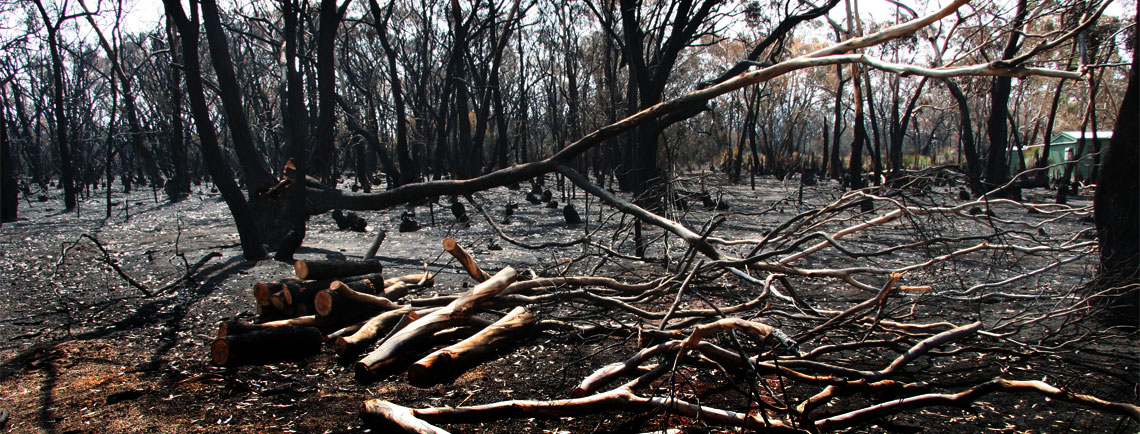
Ignition of the building due to radiant heat exposure or direct flame contact from fuel located close to the house.
Ember entry into the building through roof cavities on ridgelines, gutter lines, roof valleys and vents.
Door gaps, under floor spaces or windows broken by flying debris.
Ignition due to ember contact with timber decks, windows and doorframes or flammable items stored around the house such as doormats and firewood heaps.
The condition of the building exposing it to ember entry and the siting of the building on the property.
What can be done with respect to these factors to improve the houses chance of survival
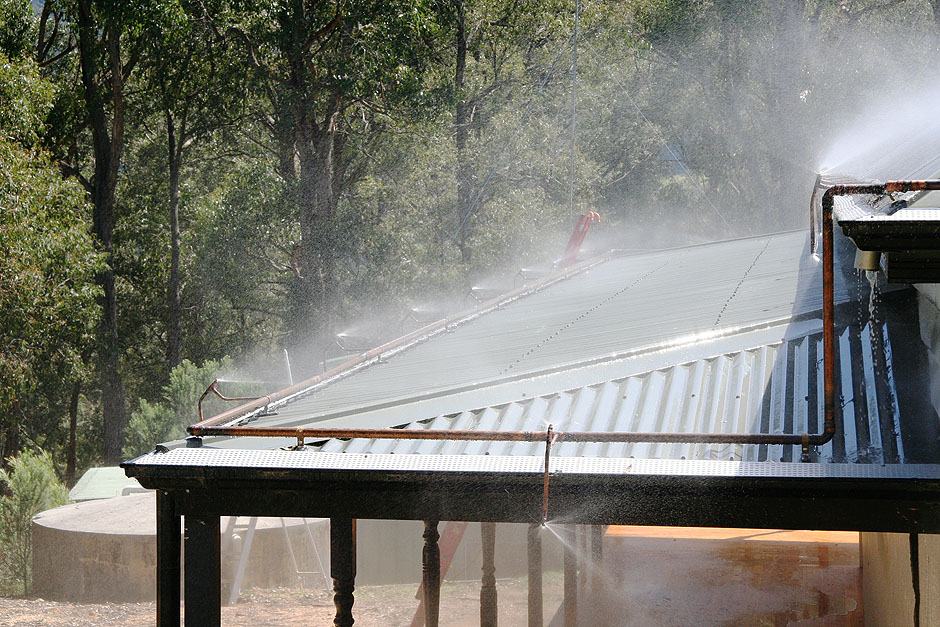
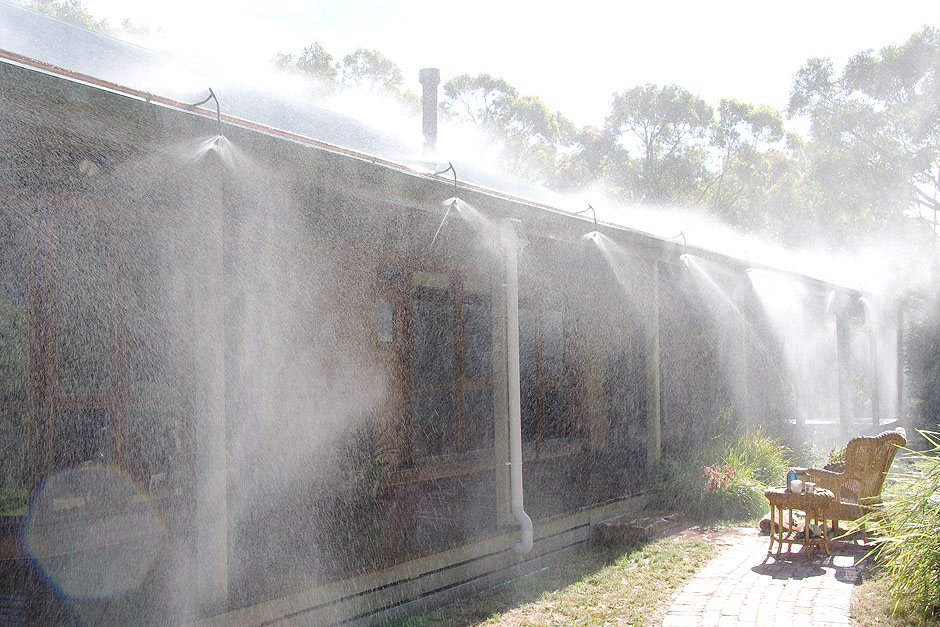
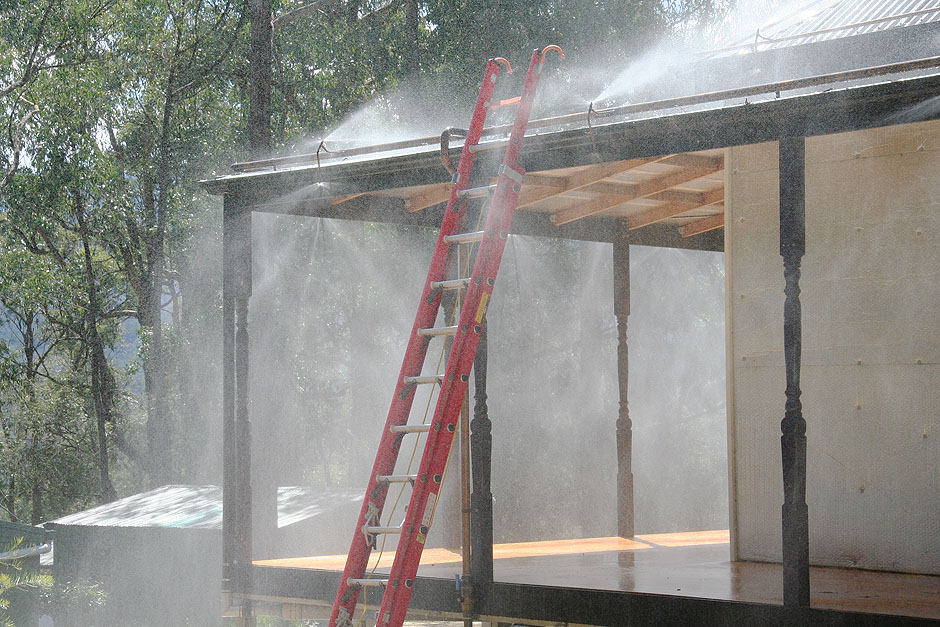
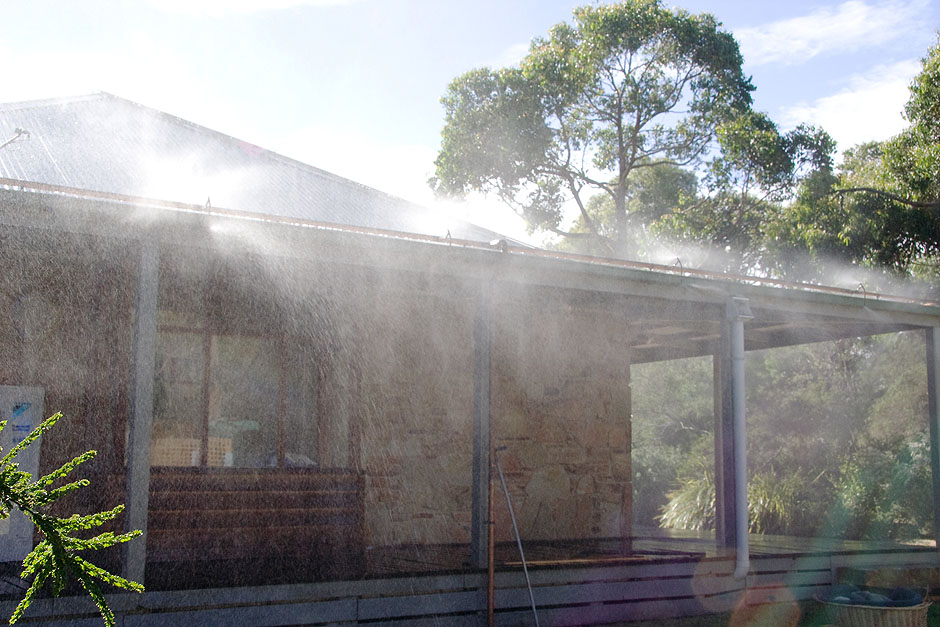
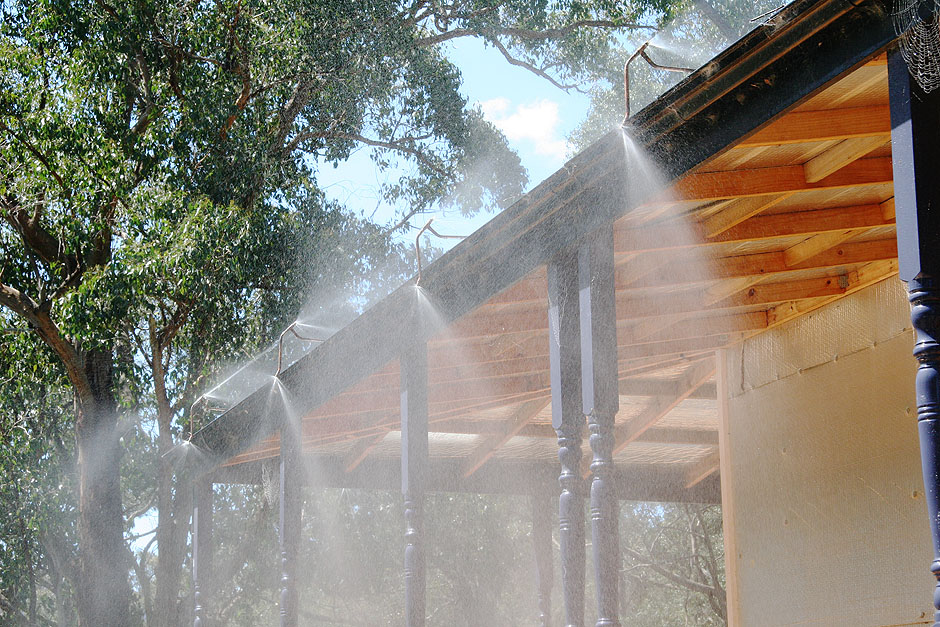
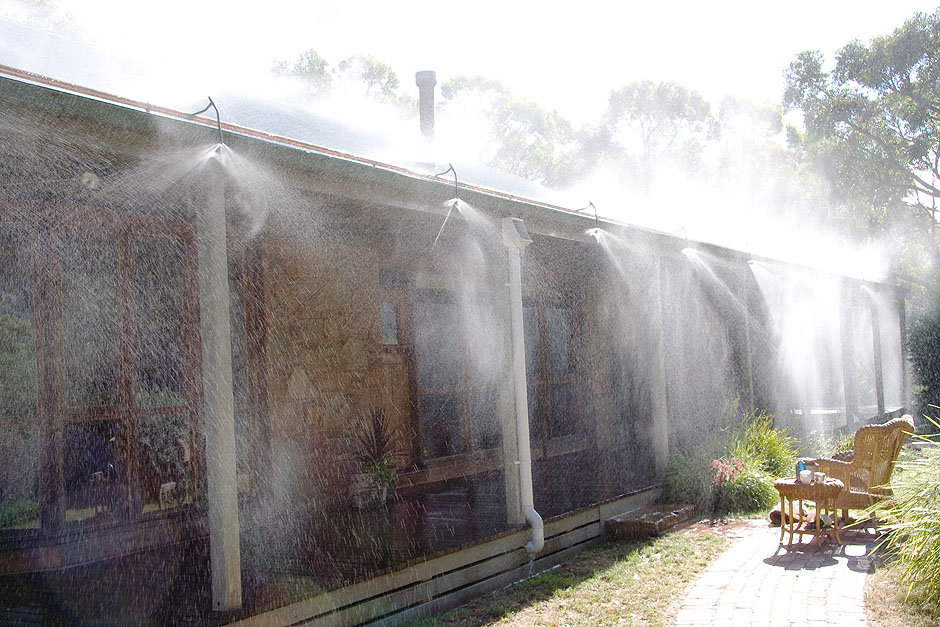
Installation of a full deluge sprinkler system will protect all vulnerable areas of a house. Sprinkler systems in the past have proved to be one of the most effective measures for protecting houses from the radiant heat and ember attack experienced during a bushfire.
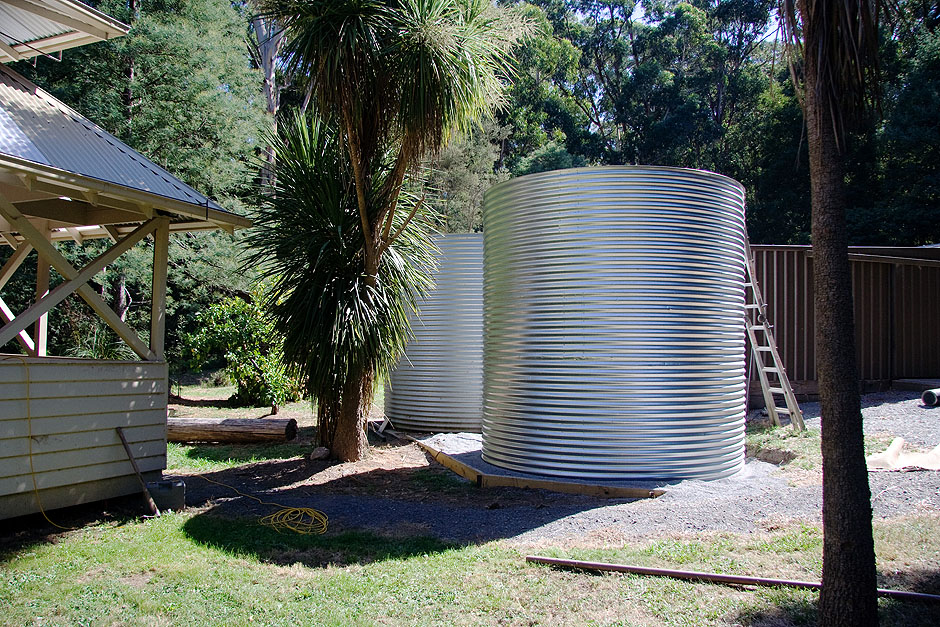
Install a static water supply, fire-fighting pump and equipment.
Sarking of all roof areas, installation of gutter guards and mesh screens on vents.
Fit doorstops, fill in under floor areas of the house with non-flammable material 300 mm from ground, fit mesh behind plinth boards and install shutters or mesh on all windows.
Avoid building timber decks on new houses, move doormats inside or away from the house on fire danger days and remove all firewood from around the house prior to the fire season.
A well designed bushfire sprinkler system should incorporate the following features
It should take into account current hydraulics standards of pipe sizing, friction and head loss and flow rates, to maximise pump and sprinkler performance.
It should provide complete coverage of all vulnerable areas of the building, including roof cavities, windows, skylights, timber decks, gas bottles and under floor spaces from radiant heat and ember attack (spark entry).
It should be flexible in design, and able to suit any building or roof shape, material, style and any fire exposure.
It should be a minimum maintenance system, utilizing corrosion free and heat resistant materials, removable fixed head sprinklers, serviceable filtering and incorporate a return line to the water supply allowing the pump to be run for maintenance and training without wasting water.
It should be independent of town services, having its own water supply and a petrol or diesel driven pump. An electric pump should only be used if an independent generator powers it. The water supply capacity should be calculated to provide a minimum of one hour of water, at the optimum running pressure of the system, regardless of the house size.
It should be used in conjunction with as many of the current bushfire protection standards, as recommended by, C.F.A., Australian Standards Association, Local Councils, C.S.I.R.O., and other regulatory bodies, maximizing protection to the buildings.
Extensive research and development by Blaze Control has established these concepts as essential to the reliable performance of a bushfire sprinkler system.